
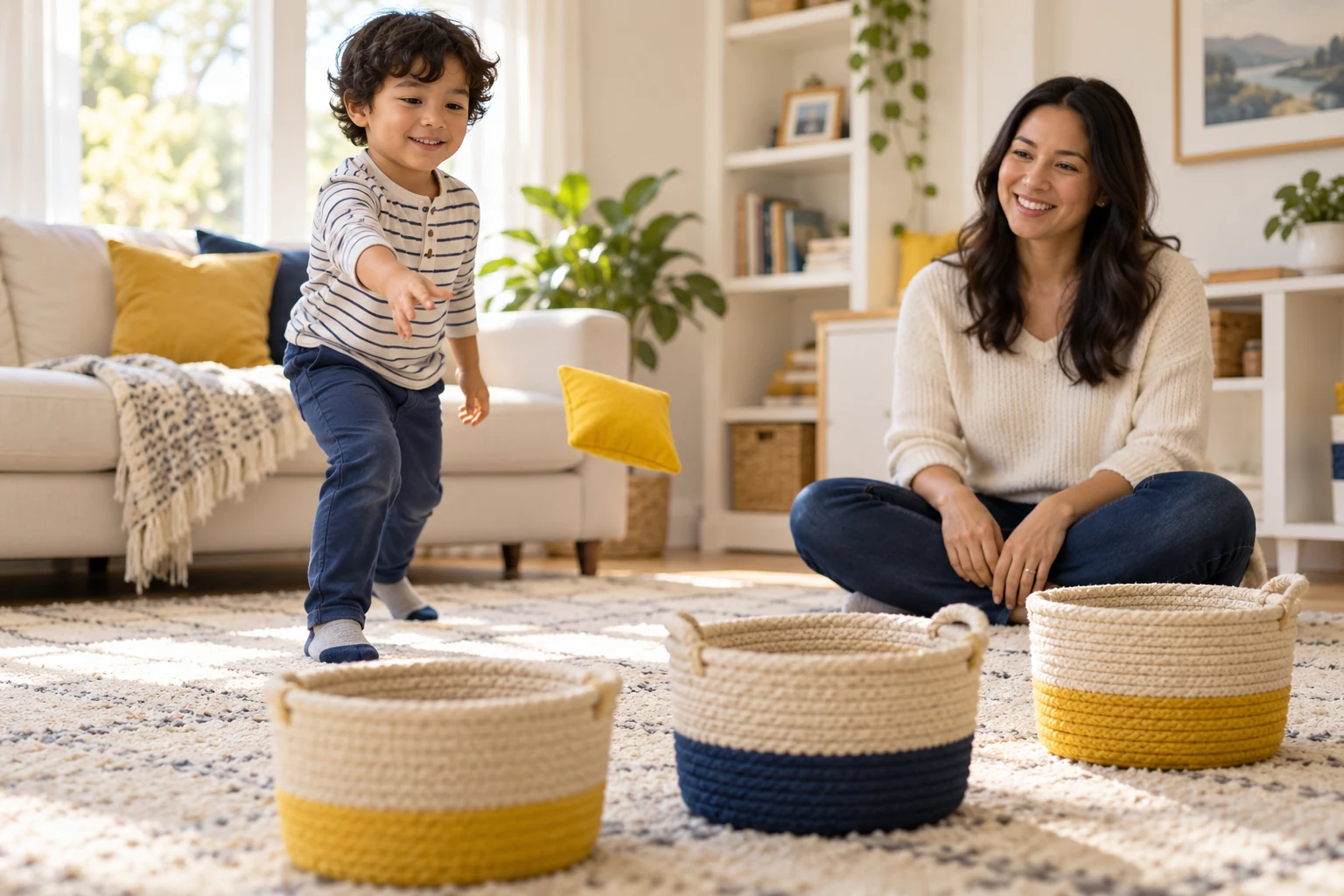
A beanbag and a basket can provide an easy starting point for indoor play. The soft bag does not roll away like a ball, and you can move the target closer whenever your child needs a simpler challenge.
Use a large, age-appropriate beanbag with secure seams. Check it before playing and put it away if the filling starts to escape. A large rolled pair of socks makes a useful alternative. Keep small loose fillings away from children who may put them in their mouths.
Set up the play space
Choose a clear floor area away from breakable objects. Place a wide, shallow basket a short distance from your child. Demonstrate a gentle underarm toss below shoulder height. Everyone should stand behind the thrower or well away from the target, and only collect bags once tossing has stopped.
Start close enough that putting the bag into the basket feels achievable. You can move back later. A seated player can use the same setup with the target at a comfortable distance.
1. Feed the hungry basket
Pretend the basket is a friendly animal waiting for lunch. Your child tosses the beanbag toward its “mouth,” then walks over to collect it. Give the animal a silly voice and let the child decide what food the bag represents.
If tossing is too difficult, begin by dropping the bag into the basket from nearby. Move to a small toss only when your child wants to try it.
2. Choose a color
Set out two baskets with different colored cards next to them. Let your child choose a color before tossing. Keep both targets close at first, so choosing and aiming do not become separate difficult tasks.
You can ask, “Where would you like it to go?” rather than calling out instructions every time. The child can change their choice between turns.
3. Near and far
Place one basket close and another slightly farther away. Compare the two distances through play. Ask which one your child wants to try next and whether they would like to move either basket.
Avoid attaching bigger praise or prizes to the farther target. Choosing a comfortable distance is part of managing the game.
4. Team delivery
Give each person one turn, then count how many bags landed in the basket altogether. Work toward a shared total instead of comparing siblings. Let a younger child stand closer so everyone has a useful role.
5. Make a target trail
Put two or three baskets along a clear route. Walk to each stopping point, pause, and toss. Keep the walking and throwing separate. This creates a small sequence without encouraging children to throw while moving quickly.
What if every toss misses?
Widen the basket, move it closer, or replace the toss with a drop. Change the setup before repeating “try harder.” You can also aim at a large towel on the floor, where landing anywhere on it counts.
Finish without a final challenge
Invite your child to deliver the last bag by hand and help stack the baskets. These games are opportunities to explore aiming and taking turns, not a formal measure of coordination. A few cheerful rounds are enough to make the activity worth repeating.