
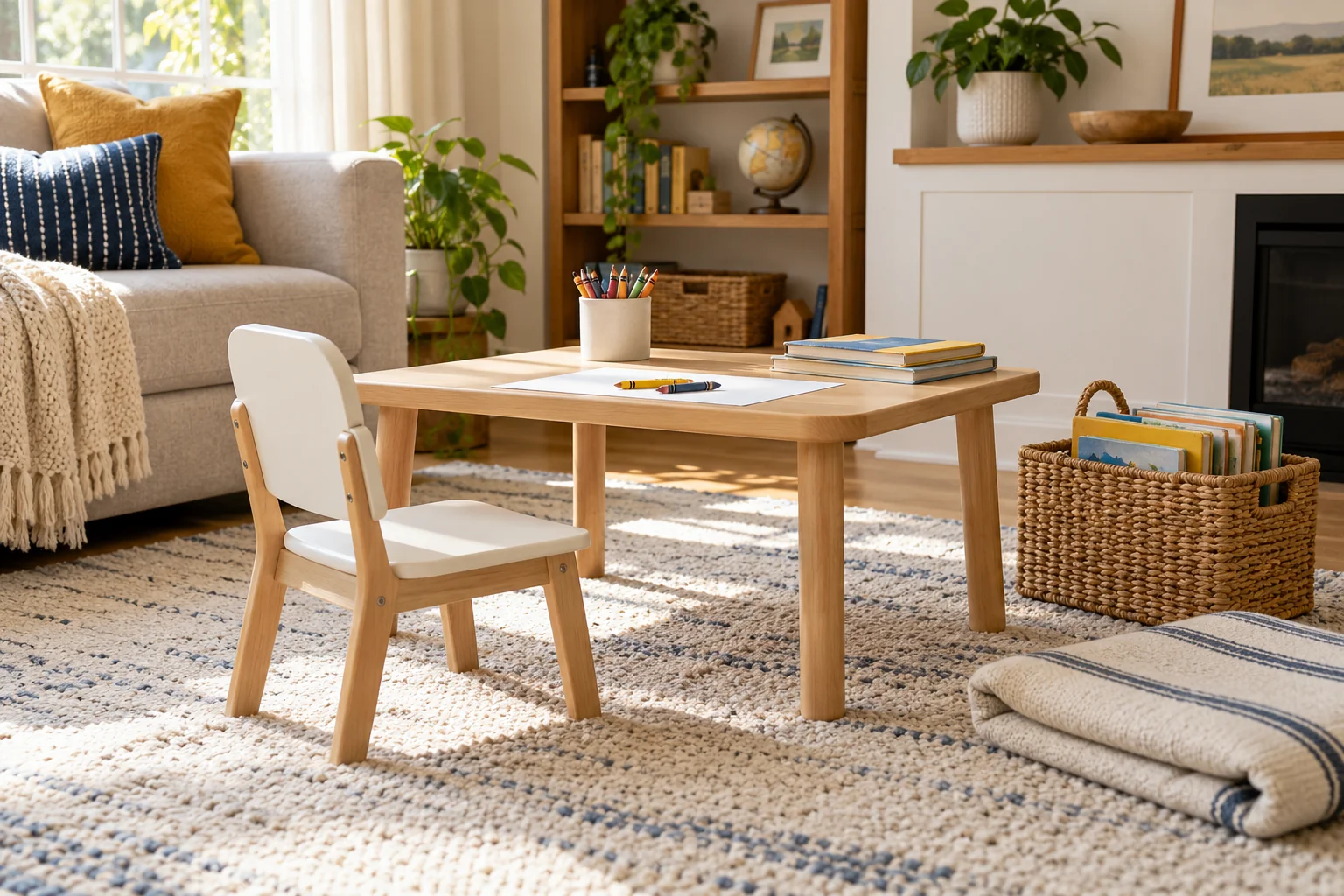
Your dining table may also be your workspace, craft area, and place for dinner. That does not stop it from being a useful learning space. A small homeschool corner works when materials are easy to reach and equally easy to put away.
Before buying furniture, look at what your child actually uses in a typical week. A comfortable surface, a place for a few books, and a portable supply box may cover most of the setup.
Begin with the activity surface
Choose a table or desk that allows your child to sit comfortably. Make sure the chair is stable and the working surface is well lit. If feet dangle, consider a secure support that does not tip or slide.
Check the view from the child's seat. Glare, a crowded tabletop, or a television directly in front of them may make the space less comfortable. Change the position of the work before assuming you need more storage.
Keep daily supplies in one portable container
Start with pencils, chunky crayons, an eraser, a few sheets of paper, and the current learning materials. Use an existing tray or box with a clear home. Scissors and other tools that need supervision can be stored separately.
Avoid packing every resource you own into the daily box. A child should be able to see what is inside without emptying it all. Store occasional materials elsewhere and bring them out for a specific activity.
Give books a small, visible space
A basket with a few books facing forward is easier to browse than an overflowing stack. Include a familiar favorite and one or two current choices. Rotate them when interest fades rather than replacing everything on a fixed schedule.
Books do not need to stay beside the desk. A comfortable reading spot nearby can separate shared reading from table work without requiring another room.
Use walls sparingly
One useful reference is often enough: a simple routine, a number line relevant to current work, or the child's latest picture. Leave some empty space. Put references where your child can actually see them while working.
Secure furniture appropriately and keep cords, blind loops, unstable shelves, and heavy objects out of reach. Avoid creating an attractive display that invites climbing.
Build a two-minute reset
At the end of an activity, put unfinished work in one folder, return tools to the box, and clear the surface. Give your child a specific job such as collecting crayons or choosing which page goes in the folder.
If the table is needed for meals, move the entire learning box to its shelf. Do not rely on sorting dozens of small items each evening. The reset should match the energy you actually have at the end of the day.
Test the setup before adding more
Use the corner for several days and write down the real annoyances. Perhaps paper is hard to reach, the chair is awkward, or projects have nowhere to dry. Solve that particular issue rather than shopping for a complete classroom makeover.
A successful small space supports the activities your family does now. It can change when your child's work changes. Start with the essentials and let daily use show you what, if anything, is missing.