
A homeschool routine does not have to look like a school timetable. For a young child, knowing the order of a few familiar activities can be more practical than watching the clock all morning.
Start with your family's real day: meals, work commitments, younger siblings, and times when everyone tends to have more patience. Build a repeatable flow around those anchors instead of filling every gap with a lesson.
Choose three daily anchors
An anchor is something that already happens regularly. Breakfast, lunch, and an afternoon walk are useful examples. Attach a small learning activity to one of them: “After breakfast, we read together.”
Choose three anchors at most for your first version. You might use reading after breakfast, a hands-on activity before lunch, and a short tidy-up later. A routine is easier to adjust when it starts small.
Try this sample morning flow
- Breakfast and a quick conversation about the day.
- A picture book or short read-aloud.
- One focused learning activity, such as counting objects or practicing a few letters.
- Movement, outdoor play, or a household break.
- A hands-on choice, such as drawing, building, or a simple science investigation.
- Tidy-up and lunch.
This is a sample sequence, not a required school-day length or a complete curriculum. Adapt the content and amount of teaching to your child's needs and your applicable education requirements.
Make the next step visible
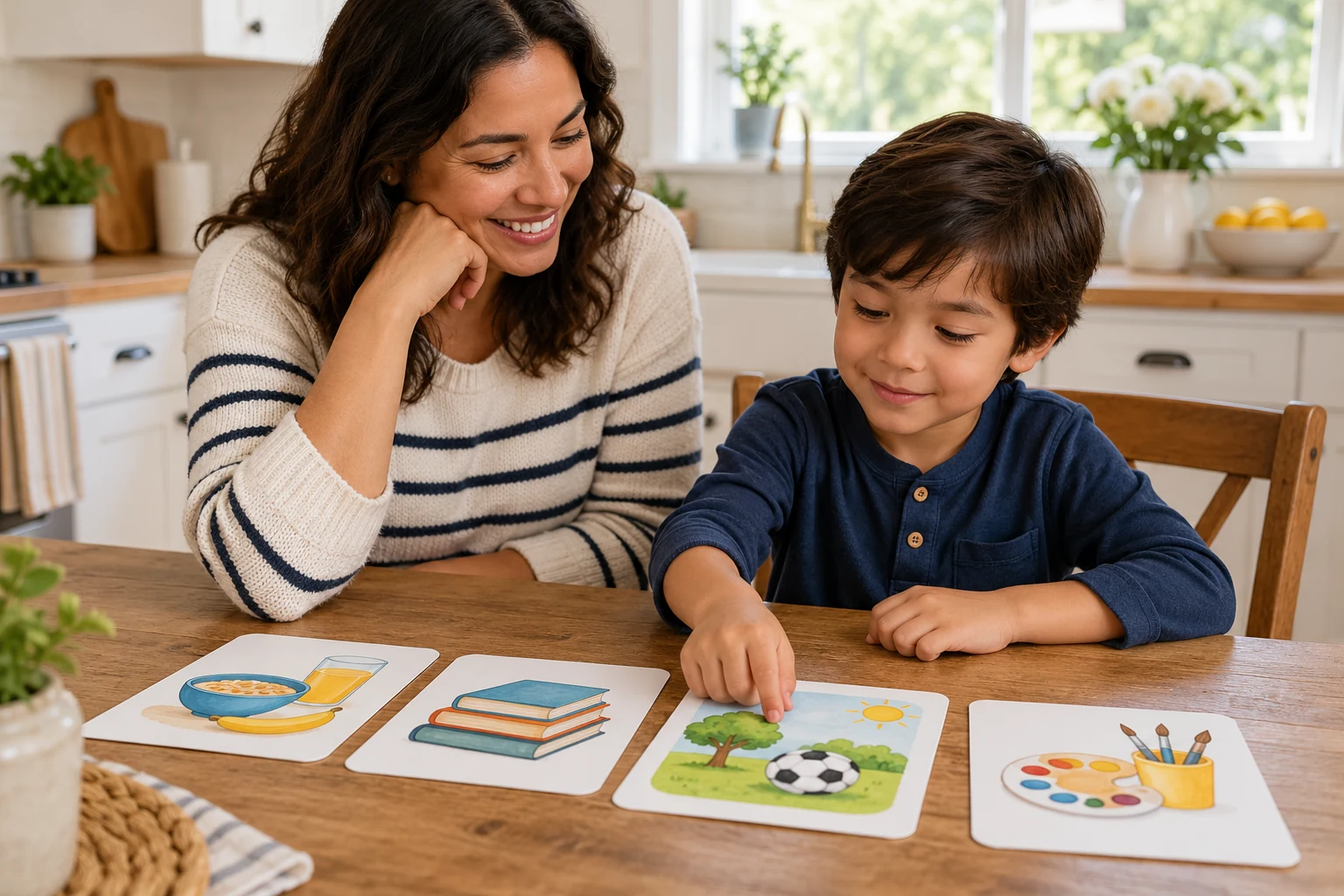
Draw three or four pictures showing the main parts of the morning. Point to the current activity, then show what follows. You do not need to display every snack, bathroom trip, or small change.
Use direct language: “First we read this page, then we go outside.” Keep the promise realistic. If outside time depends on weather, explain the indoor alternative before the child expects to leave.
Plan a lighter version in advance
Some days include appointments, poor sleep, or an unexpected work call. Decide what a manageable lighter day could contain, such as shared reading, a brief number activity, and time to play.
This does not mean ignoring required learning. It gives you a starting point for reorganizing the day instead of trying to rescue an unrealistic schedule. Move unfinished work deliberately and note what needs another opportunity.
Notice where the routine gets stuck
If the same transition is difficult every day, inspect the setup. Is the activity too long? Are supplies missing? Does a child need food, movement, help, or more warning before a change?
Try one adjustment at a time. Put materials out earlier, shorten the first task, or move a demanding activity to a different part of the day. Changing six things at once makes it hard to see what helped.
Review after a week
Ask yourself which parts happened easily and which required constant pushing. Ask your child which part they want to keep. Keep the reliable anchors and loosen the rest.
The goal is a day that has enough shape to feel familiar and enough room for real life. A routine you can return to after an interruption is more useful than a timetable that feels ruined by the first delay.