
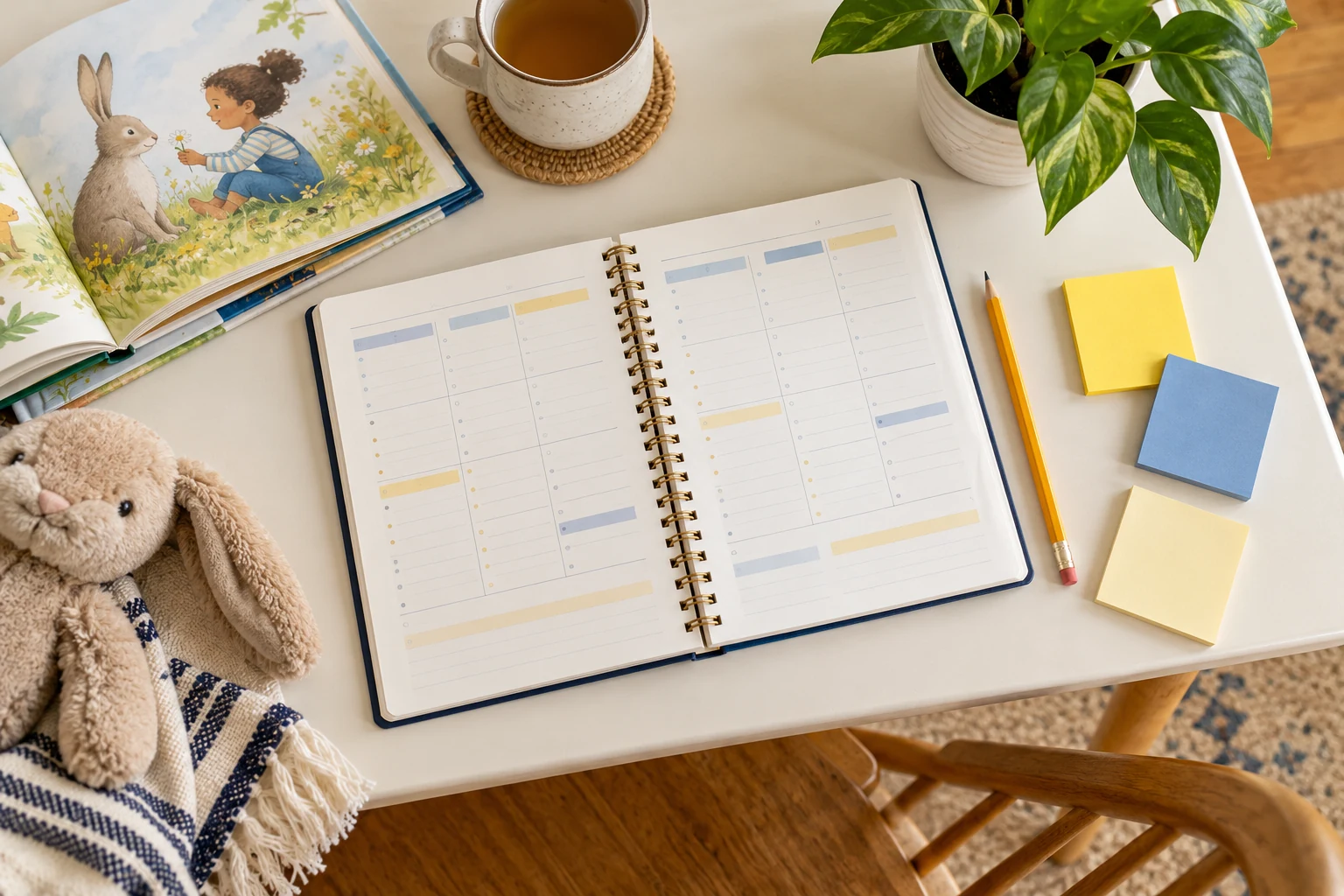
A weekly plan should help you decide what matters next. It does not need to predict every hour of family life. When a plan is too full, moving one activity can make the entire week feel behind.
Try planning the essential learning first, then add a few shared activities and some room for unfinished work. This method is a planning aid, not a substitute for your curriculum or any required education records.
Step 1: List the fixed parts of the week
Write down appointments, regular classes, work commitments, and travel time. Include anything that changes when you can give a child focused attention.
Look at the available space honestly. An appointment morning may support reading together and a small practical activity, while another day has room for a longer project. Avoid giving both days identical expectations.
Step 2: Choose specific learning priorities
Pick the skills or topics you are already working toward. Replace broad goals such as “do math” with a useful next step, such as “practice comparing groups up to ten using objects.”
Keep priorities few enough that you can recognize progress. If a skill needs regular practice, plan several short opportunities instead of one overloaded session. The amount and type of instruction should fit the child and the learning program you are following.
Step 3: Add one or two shared activities
Choose a read-aloud, a science investigation, a nature walk, or a building project. Connect an activity to a current interest where it makes sense, but do not force every subject into the same theme.
List the materials immediately. A plan that says “paper bridge” is less useful than one that also says “three paper sheets, two stable supports, and large identical blocks.”
Step 4: Group the supplies
Put the week's books and reusable materials in one accessible place. Prepare only what is necessary. You do not need a separate decorated tray for every day.
Check practical details: whether crayons are usable, whether a container leaks, and whether the activity needs adult preparation. A small check now can prevent a frustrating interruption later.
Step 5: Leave a catch-up space
Keep part of one day flexible for revisiting a tricky skill, finishing a project, or following a question. Do not automatically fill this space with extra work because the week started smoothly.
If an activity moves, decide whether it is still important. Some tasks should be rescheduled; others can be dropped because the learning goal was met another way.
Use a short daily note
At the end of the day, write one or two useful observations. “Counted objects accurately but skipped a number when saying the sequence” tells you more than “math completed.” Keep the notes brief enough that you will actually make them.
Review the plan before making the next one
Ask what your child practiced, what still needs teaching, and which parts of the setup caused unnecessary work. Keep successful activities available for repetition. Repeating a useful task does not mean the plan lacks variety.
Next week's plan can begin with those answers. A modest plan that responds to real learning gives you a clearer direction than a crowded page of tasks checked off in a rush.