
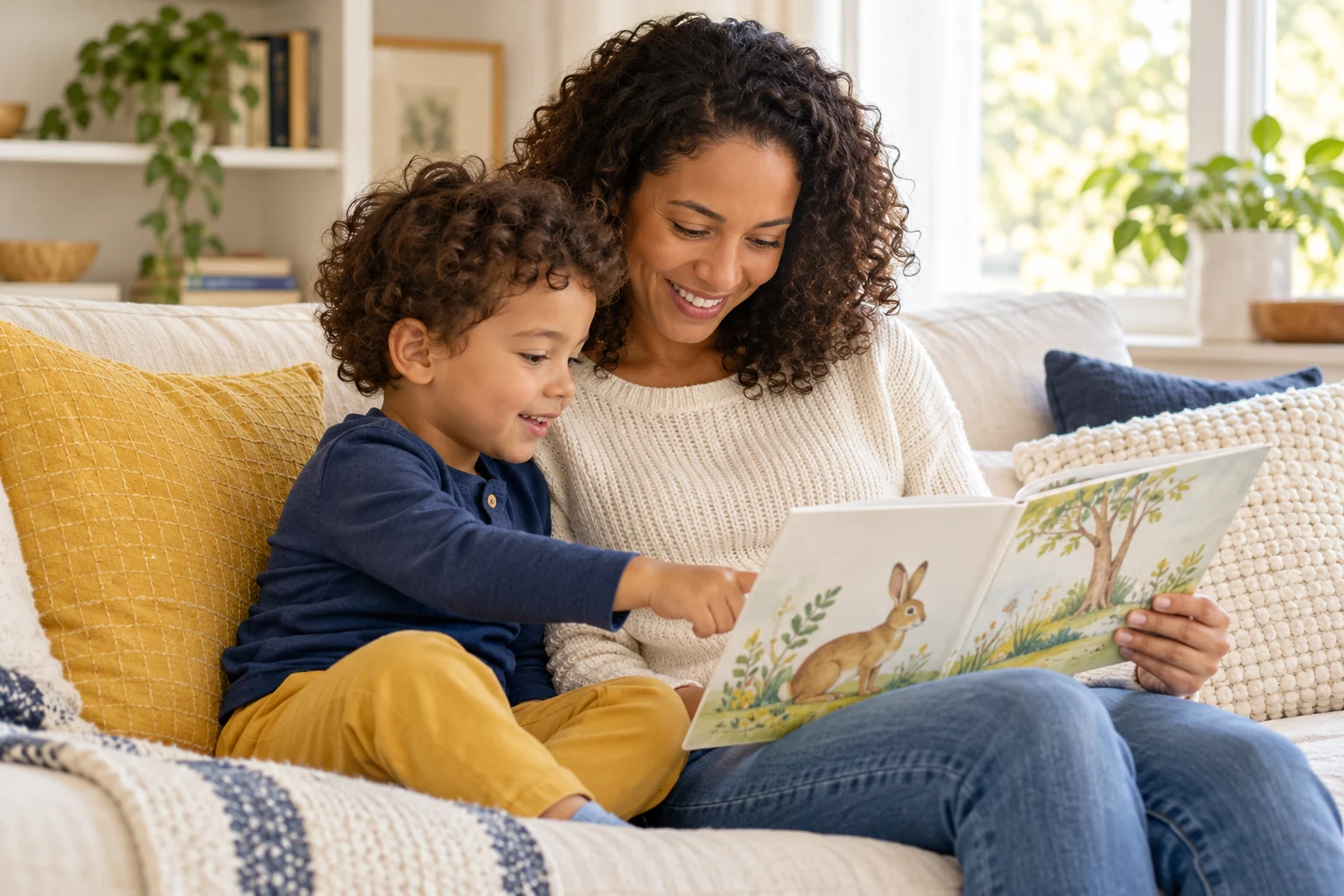
A read-aloud does not need to end with a worksheet or a long list of questions. Sharing a book, noticing an interesting picture, and talking about one moment can be a complete reading experience.
Build the routine around a time when you can give the book and your child some attention. That might be after breakfast, before rest time, or while an older sibling finishes another task. A predictable opportunity matters more than a perfect reading corner.
Choose a manageable book
Offer two suitable options and let your child choose. Include familiar books as well as new ones. Repeating a favorite is still worthwhile shared reading; you do not have to keep introducing new titles to make the routine count.
If a book is too long for the moment, read part of it and leave a bookmark. Say clearly that you will stop at a particular page or chapter. You can also choose a shorter book without treating it as an easier or less valuable choice.
Before reading: invite one prediction
Look at the cover together. Ask something natural, such as “What do you notice?” or “What do you think this character is carrying?” Accept an answer without immediately checking it against the story.
Skip the question if your child wants to begin. The opening conversation should welcome them into the book, not delay the part they are eager to hear.
During reading: pause where interest appears
Read a few pages without stopping. When your child points, laughs, or asks a question, follow that interest. You might wonder together why a character made a choice or what is happening in the background illustration.
Avoid interrupting every page to test recall. Too many questions can make it difficult to follow the story. If your child asks about an unfamiliar word, give a short explanation and keep going.
After reading: choose one response
- Retell a favorite moment with a toy.
- Draw a scene and explain it.
- Talk about a character's choice.
- Find the page your child wants to see again.
- Simply close the book and say what you enjoyed.
One response is enough. Let a younger child point or act something out instead of expecting a full spoken summary.
What if your child moves while listening?
Try a comfortable position and allow a quiet, familiar object to hold if it helps the session work. You do not need to demand a particular sitting posture to share a story.
If play becomes loud or the book is repeatedly interrupted, pause and offer a choice: continue for one more page or save it for later. Avoid assuming movement always means either good listening or no listening; notice how your child responds to the story.
Keep the routine separate from a performance
Shared reading can include children who are learning to decode and children who already read independently. They do not have to read aloud to earn a turn listening. Use separate, appropriate instruction for skills that need direct teaching.
Make tomorrow easy
Place the next book where you will see it and keep the bookmark nearby. Start with a short, repeatable session. The goal is a welcoming habit of sharing books, with enough room for both the story and your child's own ideas.